
Introduction
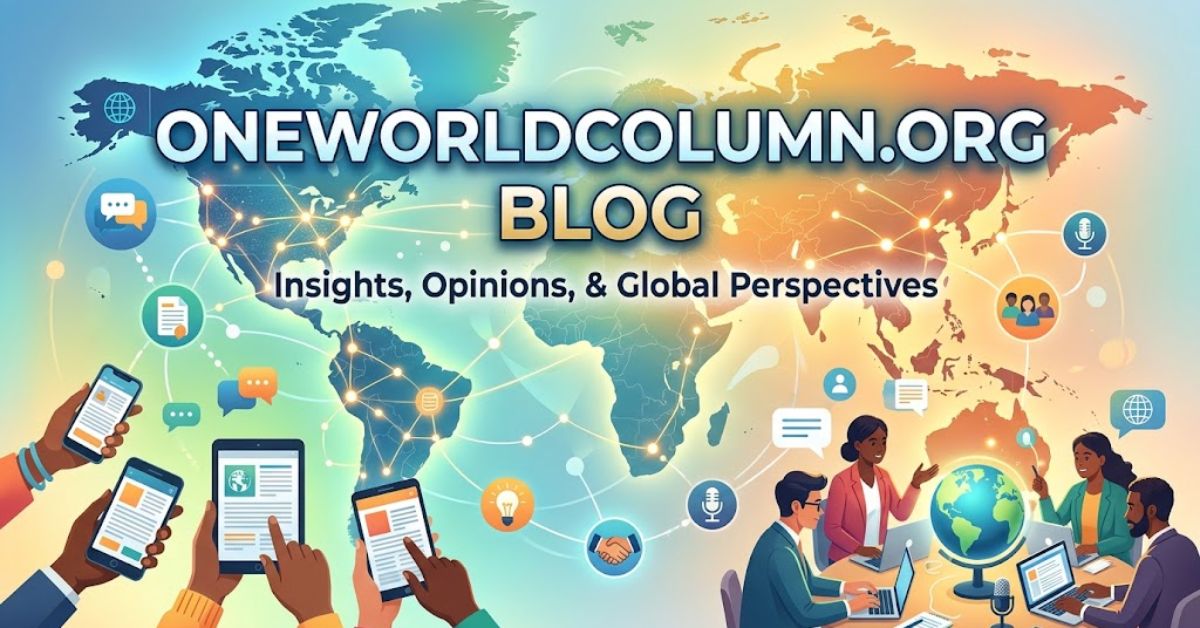
The OneWorldColumn.org Blog is a useful example of how online opinion writing can connect local experiences with larger global conversations. Readers today encounter a constant stream of news, commentary, social posts, and competing viewpoints. A strong global opinion platform can help organize those ideas into thoughtful discussions about society, politics, human rights, peace, culture, and the environment. However, it is important to separate verified information about a website from assumptions based on its name or older references. Current web results show that the OneWorldColumn name has been associated with different online projects over time, so readers should check the specific domain and publication date before drawing conclusions. Oneworldcolumn
This guide explains the purpose of global opinion writing, how this type of blog can be structured, what readers should look for in credible commentary, and how thoughtful writing can encourage informed discussion.
Quick Answer: What Is the OneWorldColumn.org Blog?
The OneWorldColumn.org Blog refers to a publishing concept centered on global perspectives, opinion writing, and discussion of issues that cross national and cultural boundaries. Search results associated with the name describe themes such as social justice, peace, environmental concerns, human rights, cultural understanding, and international affairs. Oneworldcolumn
There is an important distinction, however. The current web contains similarly named domains and references to an older “One World Column” publication. Recent reporting notes that the historical project and some current websites using the OneWorldColumn name should not automatically be treated as the same organization. Tech Garena
Understanding the Purpose of Global Opinion Writing
Global opinion writing gives people a way to examine issues that affect communities beyond their immediate surroundings. Unlike breaking-news reporting, an opinion article can spend more time explaining context, presenting an argument, and exploring why an issue matters. Topics may include international relations, climate policy, migration, economic inequality, human rights, education, technology, or cultural change.
The strongest commentary clearly separates facts from interpretation. A writer might use government statistics, academic research, historical records, or statements from recognized organizations to establish a factual foundation. The writer can then explain what those facts may mean. This distinction builds trust because readers can understand which parts are evidence and which parts represent the author’s analysis.
A global perspective also encourages readers to look beyond a single country’s experience. A policy that appears successful in one region may produce different results elsewhere because of cultural, economic, or political differences. Good opinion writing recognizes these differences instead of presenting one viewpoint as universally correct.
What Makes a Global Opinion Platform Valuable?
A meaningful opinion platform creates space for different experiences and viewpoints. Search results describing the OneWorldColumn concept frequently emphasize diverse voices, international issues, social development, environmental sustainability, and community engagement. Oneworldcolumn These themes matter because many modern problems cannot be understood through one discipline or one geographic perspective.
For example, climate change involves science, economics, public policy, agriculture, energy, and community planning. Human rights discussions can involve law, history, culture, and international institutions. A well-organized blog can bring these connections together without forcing readers to navigate a confusing wall of information.
However, diversity of opinion does not mean every claim deserves equal weight. Readers should consider the author’s expertise, evidence, sourcing, publication date, and potential conflicts of interest. Independent commentary can complement established reporting, but it should not automatically replace primary documents, peer-reviewed research, or reliable news coverage.
Common Topics in Global Opinion Writing
A global opinion blog can cover a broad range of subjects while maintaining a consistent editorial purpose. Common themes include human rights, social justice, peace, environmental sustainability, international politics, cultural exchange, economic development, and global citizenship. Search results associated with the OneWorldColumn name identify several of these areas as recurring themes. Oneworldcolumn
Environmental writing, for instance, may examine how climate decisions affect different communities. Social commentary can explore inequality, access to education, or changing cultural expectations. International affairs articles may explain relationships between governments, organizations, and communities. The subject can change, but the underlying goal remains similar: help readers understand an issue from more than one angle.
Strong topic selection also gives writers room to add original value. Instead of simply repeating a headline, an effective column asks a useful question: Why does this matter, who is affected, and what should readers understand that they may have missed? That approach creates more meaningful content than simply summarizing current events.
How Readers Should Evaluate Opinion and Analysis
Opinion deserves thoughtful evaluation, especially when an article discusses politics, health, economics, law, or other subjects with real-world consequences. Start by identifying the author and understanding the article’s purpose. Is it reporting, analysis, personal commentary, advocacy, or a mixture of these formats?
Next, check the evidence. Reliable commentary should make it reasonably clear where important facts come from. Look for links to primary sources, research papers, official records, reputable institutions, or direct statements. Also check whether statistics are presented with enough context to avoid misleading conclusions.
The same principle applies to the OneWorldColumn.org Blog or any similar independent publishing platform. A thoughtful article can introduce an important perspective, but readers should compare significant claims with other credible sources. This is especially important when an article makes strong claims about political events, scientific findings, financial matters, or public policy.
How Global Opinion Writing Builds Critical Thinking
One of the biggest benefits of opinion writing is that it can teach readers how to examine arguments rather than simply accept them. A well-written column presents a central position and supports it with reasoning, evidence, examples, and relevant context. Readers can then decide whether the argument is convincing.
This process strengthens media literacy. Instead of asking only, “Do I agree with this?” readers can ask better questions: What evidence supports this claim? What information is missing? Does another credible source reach a different conclusion? Is the writer presenting facts fairly?
That habit becomes increasingly valuable in a digital environment filled with short posts, viral claims, edited videos, and emotionally charged headlines. Global opinion writing works best when it encourages curiosity rather than automatic agreement. The goal isn’t to make every reader think alike. It’s to make readers think more carefully.
The Role of Contributors and Different Perspectives
A global platform becomes more useful when contributors bring different professional, cultural, and geographic experiences. A journalist may approach an issue differently from an academic, community organizer, researcher, or independent writer. Those differences can make a publication richer when contributors support their arguments responsibly.
Several descriptions of the OneWorldColumn concept portray it as a space for varied contributors and perspectives. Oneworldcolumn Still, readers should verify contributor information directly on the relevant website rather than assuming that every description found online is current.
For writers, contributor diversity also creates an opportunity to explain how personal experience shapes an argument. A first-person account can provide valuable context that statistics cannot capture. At the same time, personal experience should not automatically be presented as proof of a broader trend. The strongest writing combines lived experience with evidence and wider context.
OneWorldColumn.org Blog and the Importance of Source Verification
The name OneWorldColumn.org has appeared in different online contexts, making source verification particularly important. Current search results include a site using the OneWorldColumn name for parenting content as well as another domain presenting broader global perspectives. Oneworldcolumn Historical material also refers to an earlier One World Column associated with peace, environmental issues, and human rights. rupertread.fastmail.co.uk.user.fm
Because of this overlap, readers should avoid treating every page mentioning “OneWorldColumn” as evidence about one single organization. Check the exact domain, author, publication date, About page, and editorial information. This small step can prevent a surprisingly large amount of confusion.
For SEO writers, this distinction matters too. Search intent around a branded or ambiguous keyword can include historical research, current website information, article analysis, and general curiosity. A high-quality article should acknowledge meaningful ambiguity instead of filling gaps with unsupported claims.
How to Read Global Opinion More Effectively
Start with the author’s main argument. Try to summarize it in one sentence before deciding whether you agree. Then identify the strongest evidence used to support that argument. If the article relies heavily on statistics or historical claims, investigate the underlying sources.
It also helps to read opposing viewpoints. If two credible writers disagree, compare their evidence rather than choosing the article with the more emotional language. Look for areas of agreement as well as disagreement. Sometimes competing arguments share the same facts but interpret their significance differently.
Finally, pay attention to dates. Global affairs change quickly. An article that accurately described a situation several years ago may no longer represent current conditions. Publication date, update date, and source date can therefore be just as important as the article’s headline.
FAQs About the OneWorldColumn.org Blog
What is the OneWorldColumn.org Blog?
The OneWorldColumn.org Blog is a term associated with online writing about global perspectives, opinion, social issues, and international topics. Because similarly named websites and historical projects exist, readers should verify the exact domain before relying on descriptions.
What topics does OneWorldColumn.org cover?
Content associated with the OneWorldColumn name has discussed areas such as human rights, peace, environmental issues, social justice, culture, and global affairs. The exact topics depend on the specific website or historical publication being referenced.
Is OneWorldColumn.org a news website?
It is better to distinguish opinion and analysis from traditional breaking-news reporting. A global opinion platform can discuss current events while focusing on interpretation, context, commentary, and different perspectives.
Is the OneWorldColumn.org Blog reliable?
Reliability should be assessed article by article. Check the author’s background, evidence, citations, publication date, and whether important claims can be confirmed through authoritative sources.
Can I use OneWorldColumn.org for research?
It can help you discover arguments, perspectives, and discussion topics, but it should not automatically be treated as an academic source. For formal research, supplement commentary with peer-reviewed studies, primary documents, official statistics, and established research institutions.
Conclusion
The OneWorldColumn.org Blog represents an important idea in digital publishing: global issues become easier to understand when writers and readers can examine them from different perspectives. Opinion writing can encourage critical thinking, cultural understanding, and informed public discussion when it clearly separates evidence from interpretation. At the same time, readers should verify sources carefully because the OneWorldColumn name appears across different current and historical web contexts. Tech Garena
Whether you’re researching global affairs, studying media literacy, or simply looking for thoughtful commentary, the best approach is simple: read critically, check important claims, compare credible viewpoints, and consider the broader context. That habit turns online opinion from passive reading into meaningful learning.
