

Introduction
Have you ever felt more relaxed when the lights are low, the sun has gone down, and the room becomes quiet? If bright spaces feel less inviting than shadows, twilight, or a softly lit room, you may relate to the lygophile meaning. Lygophile is a rare descriptive term for someone who feels drawn to darkness, dimness, shade, or gloomy environments. The word can appear in online conversations, creative writing, social media bios, and discussions about unusual personality preferences. However, it is important not to treat the term as a medical diagnosis. In this guide, you’ll learn what lygophile means, how to pronounce it, where the word comes from, common traits associated with it, and how it differs from related terms such as nyctophile and nyctophobia. You’ll also see practical examples that make the meaning easy to understand.
What Does Lygophile Meaning?
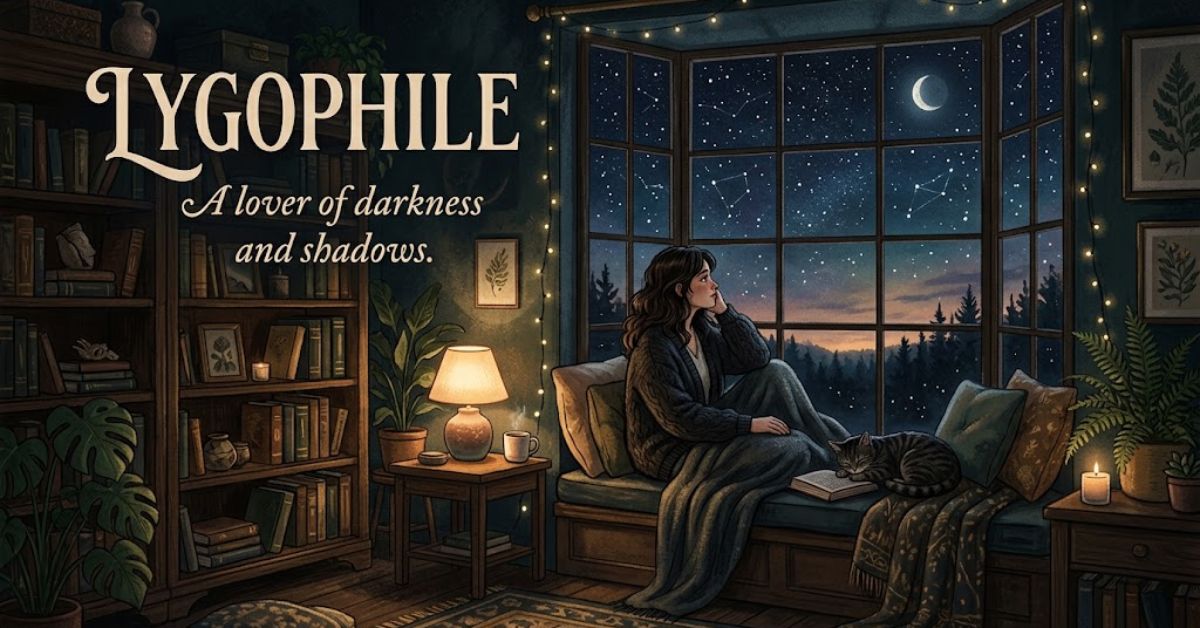
Lygophile generally describes a person who enjoys or feels comfortable in darkness, dim lighting, shadows, twilight, or gloomy surroundings. In simple English, a lygophile is someone who likes dark or low-light environments. The word can describe a preference for the atmosphere created by darkness rather than a strict desire to avoid daylight.
For example, imagine someone who prefers a dim bedroom, enjoys candlelight, loves evening walks, or finds a quiet room more comfortable when the overhead lights are off. Those preferences can fit the everyday use of lygophile. The focus is usually on attraction, comfort, or appreciation rather than fear. Historical lexical sources also use related forms of the word for organisms or people that prefer dark or shady places.
The term is also broader than simply being a “night person.” Someone can enjoy darkness during the afternoon by sitting in a shaded room, watching movies with the lights off, or working in a softly lit space. Therefore, lygophile meaning is best understood as an attraction to darkness, shade, dimness, or the mood associated with them.
Lygophile Meaning in Simple Words
In the simplest terms, a lygophile is someone who loves or strongly prefers darkness and low-light surroundings.
A few everyday examples include:
- Someone who prefers lamps instead of bright ceiling lights.
- A person who enjoys candlelit rooms.
- Someone who finds twilight peaceful and beautiful.
- A photographer who loves shadows and dark visual settings.
- Someone who feels comfortable relaxing in a dim room.
Being a lygophile does not automatically mean that a person dislikes sunlight or never leaves home during the day. It simply describes a preference or attraction.
How Do You Pronounce Lygophile?
The pronunciation of lygophile can be confusing because the word is uncommon and appears in several different online pronunciation guides. A commonly reported pronunciation is approximately “LY-guh-file,” with the final “-phile” sounding like the ending in words such as bibliophile or cinephile. Some sources give slightly different phonetic representations, which reflects the word’s relatively uncommon status.
The safest approach in everyday speech is to pronounce the word clearly rather than worry about sounding overly formal. Because lygophile is not a common word in everyday American English, listeners may not recognize it immediately. If you use it in conversation, you can simply explain that it describes someone who likes darkness or dim environments.
Where Does the Word Lygophile Come From?
The word is commonly explained through Greek-derived elements associated with darkness, twilight, shade, or gloom, combined with the familiar -phile element meaning someone who loves or has an affinity for something. The broader lyg- or lygo- word family has been associated with shadow, darkness, twilight, and gloomy conditions.
The ending -phile appears in many familiar English words. A bibliophile loves books, a cinephile loves movies, and an audiophile has a strong interest in high-quality sound. Following that pattern, lygophile carries the general idea of someone attracted to or fond of dark or shadowy surroundings.
Because the word is rare, its modern use should be treated carefully. Online explanations sometimes describe it specifically as a “twilight lover,” while others use it more broadly for someone who enjoys darkness. The broader definition is useful because actual usage can include dim rooms, shadows, shade, dusk, and nighttime settings.
Common Lygophile Traits and Characteristics
A person described as a lygophile may enjoy environments that feel calm, private, quiet, or visually subdued. They might prefer soft lamps to harsh overhead lighting or enjoy relaxing after sunset. Others may simply appreciate the artistic side of darkness, including shadows, silhouettes, moonlight, dark photography, or nighttime scenery.
However, there is no official checklist that determines whether someone is a lygophile. The term is descriptive rather than diagnostic. Possible preferences can include:
- Enjoying dim or soft lighting
- Feeling comfortable in quiet dark spaces
- Appreciating twilight and nighttime scenery
- Enjoying dark photography or visual art
- Preferring cozy, low-light interiors
- Finding shadows aesthetically appealing
- Feeling more relaxed after sunset
- Enjoying solitude in peaceful environments
These characteristics should not be treated as personality test results. Two people can both enjoy darkness for completely different reasons.
Lygophile Psychology: Why Do Some People Like Darkness?
There is no established psychological profile for lygophiles, and research specifically examining “lygophilia” is limited. That means it would be misleading to claim that every person who enjoys darkness has the same personality or psychological reason. Available discussions generally treat the concept as a preference rather than a defined mental-health condition.
Still, darkness can create an environment that some people experience as peaceful or less stimulating. A dim room may feel quieter and more private than a brightly lit, busy space. For some people, low light can support relaxation, reading, reflection, creative work, or simply winding down at the end of the day. These experiences are individual and should not be turned into universal psychological claims.
It is also important to separate a love of darkness from emotional distress. Someone may genuinely enjoy dark surroundings without having depression, anxiety, or another condition. Conversely, a person who suddenly withdraws into dark spaces because of severe mood changes may have a separate issue worth discussing with a qualified professional. The preference itself is not enough to establish a diagnosis.
Lygophile vs. Nyctophile: Are They the Same?
Lygophile and nyctophile overlap, but they are not necessarily identical. A lygophile is generally described as someone attracted to darkness, shade, dimness, or gloomy surroundings. A nyctophile, by contrast, is commonly described as someone who loves the night or nighttime environment.
The difference is easiest to understand through examples. Someone who loves sitting in a dark movie theater during the afternoon may fit the broader idea of a lygophile. Someone who specifically loves being outside at night, watching the stars, walking after sunset, or enjoying the nighttime atmosphere may be described as a nyctophile.
There is plenty of overlap between the terms. A person can reasonably identify with both descriptions. Neither label is a formal psychological diagnosis, so their meanings depend partly on context and common usage.
Lygophile vs. Nyctophobia: Love of Darkness vs. Fear of Darkness
These terms describe almost opposite experiences. Lygophile refers to a preference for darkness or low-light surroundings, while nyctophobia refers to an intense fear of darkness or nighttime. The difference is therefore about attraction versus fear.
Someone who enjoys turning off the lights and relaxing in a dark room may be described as a lygophile. Someone who becomes highly anxious when left in darkness may experience a fear that is more consistent with nyctophobia. Fear can range from ordinary discomfort to a level that interferes with daily life, so the context matters.
Importantly, liking darkness does not mean someone has a psychological condition. Likewise, simply disliking darkness does not automatically mean someone has a phobia. Clinical conditions involve more than a casual preference and are evaluated based on symptoms, distress, and functional impact.
Lygophile Examples in Everyday Life
Understanding the lygophile meaning becomes easier when you see the word in context. For example, a person might say, “I’m a lygophile because I always feel more comfortable when the room is dim.” Here, the speaker is using the word to describe a personal preference.
Another example could be: “She loves photographing shadows and empty streets at dusk, so her friends call her a lygophile.” The sentence connects the term with an appreciation for darkness and twilight rather than fear.
You could also use the concept in creative writing: “As a lygophile, he preferred the quiet blue hour before night completely settled in.” This use gives the word an atmospheric quality. It works particularly well when describing characters, photography, interior design preferences, poetry, or personal aesthetics.
Is Lygophile a Real Word?
Yes, lygophile is an established term in some lexical sources and online usage, but it is relatively uncommon. You may not encounter it in everyday American conversation or in every major general-purpose dictionary. Historical lexical material includes related forms such as lygophilous, while modern online sources commonly use lygophile for a person who prefers dark or shadowy places.
That distinction matters. A word can have documented usage without being common or standardized in everyday speech. Lygophile falls into that less-familiar category. If your audience has never encountered the term, giving a short explanation alongside it can make your writing clearer.
For example, instead of writing only “He is a lygophile,” you could write, “He is a lygophile, meaning he enjoys dark and low-light environments.” That approach removes confusion while preserving the interesting vocabulary.
Quick Answer: What Is a Lygophile?
A lygophile is a person who enjoys darkness, dim light, shadows, shade, or gloomy surroundings. The word is generally used as a descriptive term for a personal preference.
It does not mean someone is afraid of daylight, stays awake all night, or has a mental-health disorder. It is also different from nyctophobia, which involves fear of darkness.
FAQs About Lygophile Meaning
What does lygophile mean in simple English?
Lygophile means a person who likes darkness, dim light, shadows, or low-light environments. It is usually used as a descriptive or informal term.
Is being a lygophile a psychological disorder?
No. Lygophile is not recognized as a formal psychiatric diagnosis. There is also limited scientific research establishing a specific psychological condition called lygophilia.
What is the difference between a lygophile and a nyctophile?
A lygophile is generally drawn to darkness, shade, dimness, or gloomy settings. A nyctophile is more specifically associated with a strong liking for nighttime.
Is lygophile the opposite of nyctophobia?
In everyday meaning, they describe very different reactions to darkness. Lygophile refers to attraction or enjoyment, while nyctophobia refers to fear of darkness.
What are common lygophile traits?
Commonly associated traits include enjoying dim rooms, twilight, shadows, nighttime scenery, candlelight, dark photography, and peaceful low-light environments. These are preferences, not diagnostic personality traits.
Conclusion
The lygophile meaning is fairly simple: it describes someone who feels drawn to darkness, dim light, shade, twilight, or gloomy surroundings. The word is uncommon, but Lygophile has a clear descriptive use and appears in lexical and online sources. It can describe someone who enjoys the calm atmosphere of a dark room, appreciates shadows in photography, or simply feels more comfortable when the lights are low.
Just remember that lygophile is not a clinical diagnosis. Lygophile should not be used to label someone’s mental health or personality without context. If you enjoy the quiet atmosphere of dusk or prefer soft lighting to bright rooms, the word may be a useful way to describe that preference. In short, being a lygophile is about appreciating darkness—not being afraid of it.
